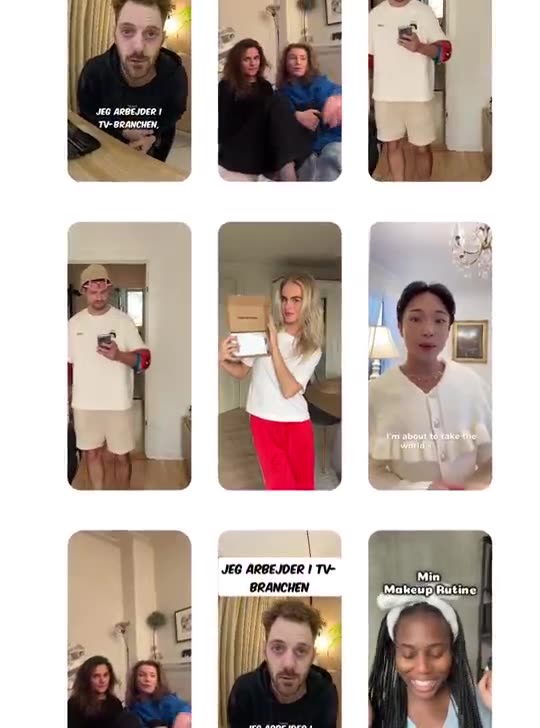
With UGC you pay for content your brand owns and uses in its ads and own channels. With influencer marketing you pay for access to a creator's audience, because the content is posted on the creator's own profile.
UGC vs influencer marketing: the short version
UGC and influencer marketing are often mixed up, and it's easy to see why. Both involve creators, content and a partnership with a brand. But the difference changes everything about strategy, budget and measurement.
You pay for content. The brand owns the videos and distributes them itself, typically as ads, on its website and in its own channels.
You pay for distribution. The creator posts on their own profile and gives you access to their audience and the trust it places in them.
If you need a thorough introduction to each discipline, start with our guides to what UGC is and what influencer marketing is. This page is about choosing between them.
UGC vs influencer marketing side by side
Look at the two disciplines point by point and it becomes clear that they do different jobs:
Who owns the content?
UGC: the brand, within the agreed usage rights.
Influencer marketing: the content lives on the creator's profile and is tied to it.
Who do you reach?
UGC: whoever you target with ads.
Influencer marketing: the creator's followers and whoever the algorithm shows the post to.
What are you paying for?
UGC: production and usage rights.
Influencer marketing: content plus access to the audience and the creator's credibility.
Does follower count matter?
UGC: hardly at all; it's the content that counts.
Influencer marketing: yes, but how well the audience matches yours matters more than its size.
How long does it last?
UGC: as long as the usage rights apply and the content performs.
Influencer marketing: most visibility in the days after the post.
How do you scale?
UGC: by moving ad budget to the best videos.
Influencer marketing: by adding more creators or boosting posts.
When should you choose influencer marketing?
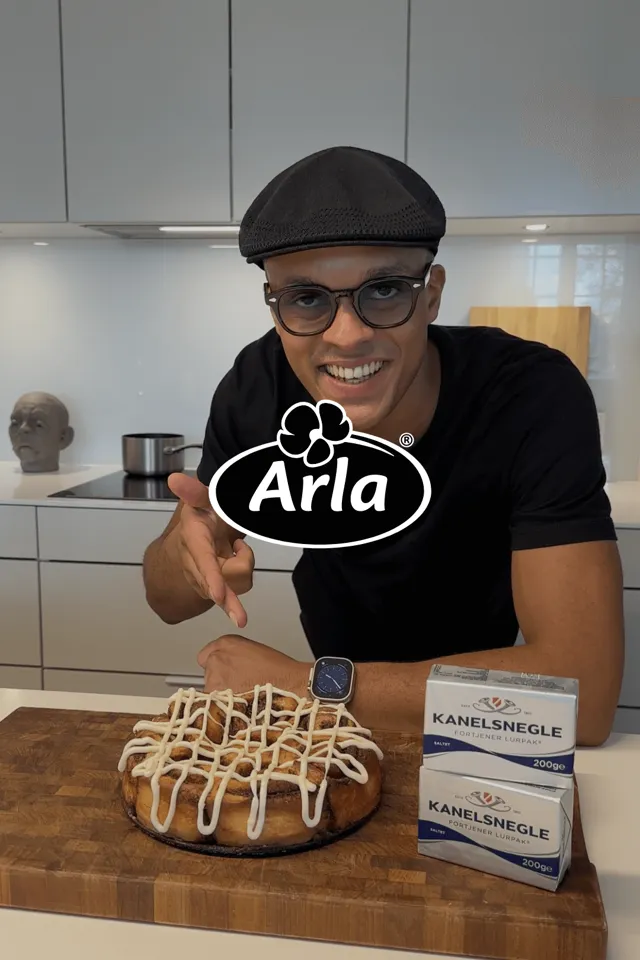
Influencer marketing is the right choice when you need attention and credibility you can't buy in an ads manager. Typical situations are:
- A launch where lots of people need to hear about the product in a short time
- A new brand or a new category that needs a recommendation from someone people trust
- An audience that's hard to reach with ordinary ads
- A trend or challenge that has to spread through participation
- A message that needs a personal messenger to be taken seriously
Here it isn't mainly the video you're paying for, but the relationship the creator has built up. That also means the choice of creator matters far more than with UGC.
A profile whose audience doesn't match yours delivers views, but rarely impact.
If you want to start a trend that spreads beyond the creators you pay, read our guide to TikTok trends, where we look at what makes users pick up a format themselves.
When should you choose UGC?
UGC is the right choice when you want to work in a performance-driven way and keep full control over where, and for how long, the content is shown:
- You run, or want to run, ads on TikTok, Instagram or Facebook
- You want to test lots of angles and hooks to find what converts
- You need content for product pages, landing pages and emails
- You want to build a content library you can draw on for months
- The budget is too small to put it all behind one big creator
Here you're investing in an asset you can optimise yourself. In return, you need a plan for paid social advertising, because without distribution UGC never gets seen.
How to think about the budget
There's no single right split, but a few rules of thumb make the choice easier. Think about where the customer is in their journey: if they don't know you at all, you need reach and credibility.
If they're considering a purchase, you need content you can keep showing them until they act.
A small budget often goes furthest on UGC combined with ads, because you can test on a small scale and scale what works. A bigger launch budget can carry influencer marketing as the engine for attention and UGC as the engine for conversion.
Remember to factor in usage rights. If you want to use influencer content as an ad, it has to be agreed and paid for in advance. It's often cheaper to agree it from the start than to negotiate afterwards.
Online shop with a new product
Start with UGC from several creators, test hooks in ads and scale the winners. Add a few creators with their own audience once you know which messages work.
Launch with a fixed date
Use influencer marketing to build attention around the date, and have UGC ready for ads that can keep the momentum going afterwards.
Education provider or organisation
Let creators tell the story on their own profiles for credibility, and target the best videos with ads at the exact audience, for example in particular cities.
If you need help putting the plan together, you can book a free consultation with us.
How to combine UGC and influencer marketing
One doesn't rule out the other. The best results come when influencer marketing creates the attention and UGC converts and scales. This is how we typically build the campaign:
Launch through creators
Creators post on their own profiles and create the first wave of attention and conversation.
Let it run organically
Follow how the content performs, typically for 3 to 7 days. It shows which hooks, creators and angles hit home.
Pick the winners
Find the videos that hold viewers and drive action, and filter out the rest.
Scale with ads
Use the best videos as ads, for example as Spark Ads from the creator's profile on TikTok or as the brand's own ads on Meta.
Top up with UGC
Produce new variations of what worked, so the ads don't wear out, and use them on your website and in emails too.
That's how we think about creator marketing: not as two separate disciplines, but as content that has to do a specific job in a specific place.
Case: Honey used both in the same campaign
Scanbox Entertainment wanted to build hype for the youth film Honey ahead of its premiere and drive ticket sales at the same time. The campaign is a good example of why UGC vs influencer marketing isn't an either-or.

The creators' profiles provided the reach and credibility, while the many videos users made themselves gave the campaign its organic spread. That's exactly the interplay we aim for.
Common misconceptions about UGC and influencer marketing
- That UGC is always cheaper. It's often cheaper per video, but without ad budget it reaches no one.
- That influencer content can automatically be used as an ad. That requires an agreement on usage rights.
- That you have to choose one discipline. Most campaigns get stronger when the two work together.
- That UGC should look cheap. It should look natural, which takes just as much craft.
- That big profiles always deliver the most. Audience match beats follower count in both disciplines.
Our approach starts with three questions: What does the content need to do? Where will it be used? And who should make it? With our network of creators we find the set-up that suits each job, and you can see some of them among our talent.
Frequently asked questions
Per video, UGC is often cheaper, because you don't pay for access to the creator's followers. But UGC has to be distributed to be seen, so you need to factor in ad budget. Influencer marketing includes distribution in the price. So compare the total cost of reaching your audience, not just the price per video. The cheapest option is the one that best solves the job you have.
Yes, if it's agreed with the creator. On TikTok, for example, you can run Spark Ads, where the ad is shown from the creator's profile, and Meta offers similar options. Agree in advance how long and in which channels the content may be used, so there's no doubt later. It's often one of the most effective ways to combine the credibility of influencer marketing with the scale of paid advertising.
For direct sales, UGC in ads often performs well, because you can test many versions and show the best ones again and again to people considering a purchase. Influencer marketing is strongest at building awareness and credibility, which makes the sale easier later. In practice we see the best results when influencer marketing creates the demand and UGC in ads harvests it.
Yes. Many creators do both. It just needs a clear agreement: which videos are posted on the creator's profile, and which are delivered to the brand for its own use? The price and usage rights differ between the two, so the agreement has to spell that out. One advantage of using the same creator is that the face is recognised when the audience sees the ad after seeing the post.
Spark Ads is an ad format on TikTok in which an existing post, for example from a creator's profile, is used as an ad. The ad runs from the creator's account, so likes, comments and followers all build up in one place. The creator has to give the brand access via a code. The format bridges influencer marketing and UGC, because you get the creator as the messenger and your own targeting at the same time.
Content posted on a creator's profile as part of a commercial partnership must be clearly labelled as advertising under the Danish Marketing Practices Act. That also applies when the creator's post is used as an ad. When UGC runs as an ad from the brand's own account, the platform shows that it's an ad. Always agree the labelling in advance, so both brand and creator stay within the rules.