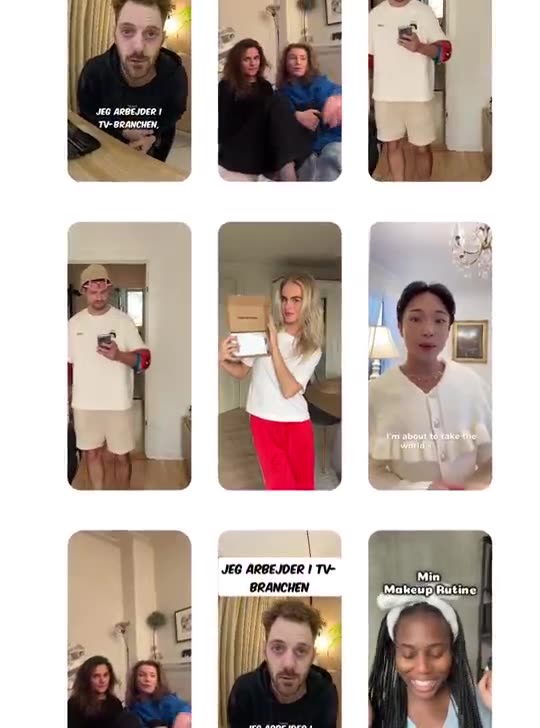
UGC works because it looks like what people already watch in their feed, so it doesn't feel like advertising.
What is UGC and what does it mean?
Originally, user-generated content meant anything ordinary users posted about a brand of their own accord: reviews, photos of a purchase or a holiday video. That still exists, and it's worth its weight in gold when it happens naturally.
Today most marketers use the term for something more specific. UGC is content a brand commissions from creators, made to look and feel like the content users make themselves. What sets it apart from an ordinary creator partnership is where the content ends up.
Made by real customers on their own initiative. Highly credible, but you can't control volume, quality or timing, and you need permission before you use it.
Made by a UGC creator to a brief. You decide the angles, the volume and the deadline, and you get the rights to use the content wherever it makes sense.
If the creator posts the video on their own profile, it's closer to influencer marketing. UGC is about content the brand can use, test and scale itself.
We go through the difference in detail in our guide to UGC vs influencer marketing.
What is a UGC creator?
A UGC creator is someone who makes content for brands rather than for their own channel. So what matters isn't the number of followers, but the ability to make content that grabs attention and gets the message across in a few seconds.
A good UGC creator can write and deliver a hook, film with good sound and light on a phone, speak naturally to camera and understand how a video should be edited to hold the viewer.
Many of the creators in our network already work with UGC and know what brands need.
- A strong hook in the first few seconds
- Natural delivery that doesn't sound scripted
- An understanding of the platform's formats and sounds
- The ability to deliver several variations of the same idea
- Reliability with deadlines and feedback
If you're a creator and want to make UGC for brands, read more on the page about becoming a creator. If you're a brand, you can browse profiles among our talent.

What is UGC content? Example formats
UGC content isn't one particular kind of video. It's a style that works across many formats. These are the ones we most often see perform:
Problem and solution
The creator opens with a familiar problem and shows how the product solves it. The classic ad format, because it makes the product relevant fast.
Honest review
A personal verdict straight to camera. It works because it feels like a recommendation from a friend.
Unboxing and first impressions
The excitement of opening the package and trying the product for the first time. Good for products where packaging and experience matter.
Tutorial and how-to
Shows step by step how the product is used. Strong for products that need a little explanation, and for removing doubts before purchase.
A day with the product
The product becomes a natural part of everyday life, such as a morning routine or the commute. The story is centre stage, not the product.
Before and after
A visible result in a short time. It needs honesty, so it doesn't promise more than the product can deliver.
Why does UGC work, especially in ads?
Users see through advertising quickly. If something feels too staged or too polished, they scroll on. UGC performs because it looks like the content users already choose to watch, so it earns a few more seconds of attention.
The other advantage is flexibility. Because you own the content, you can test several hooks, creators and angles against each other and let the data show what works. That's why UGC and paid social advertising go so closely together.
- Paid social on TikTok, Instagram, Facebook and YouTube
- Product pages and landing pages, where it adds credibility
- Newsletters and campaign emails
- The brand's own social media profiles
- Presentations, events and in-store screens
UGC is also an obvious route if you don't want to put your whole budget behind one big creator. You can start on a smaller scale, produce more variations and build a content library you can use for a long time.
How to make UGC that performs
Start with the placement
Decide where the content will be used before you write the brief. An ad in the TikTok feed needs something different from a video on a product page.
Choose creators by style and audience
Find creators your audience can see themselves in, and whose style suits the product. Follower count is secondary.
Write a brief with angles and hooks
Describe the product, the key messages and a few suggested openings. At the same time, give the creator the freedom to say it in their own words.
Order variations
Ask for several hooks and lengths of the same video. The variations are what make it possible to test and find the winners.
Test and scale
Run several versions against each other and move budget to the ones that perform. Learn from the results for the next round.
Reuse what works
The best ad can often be used on your website, in emails and on your own profiles too. That gets more value from the same production.
UGC usage rights and agreements
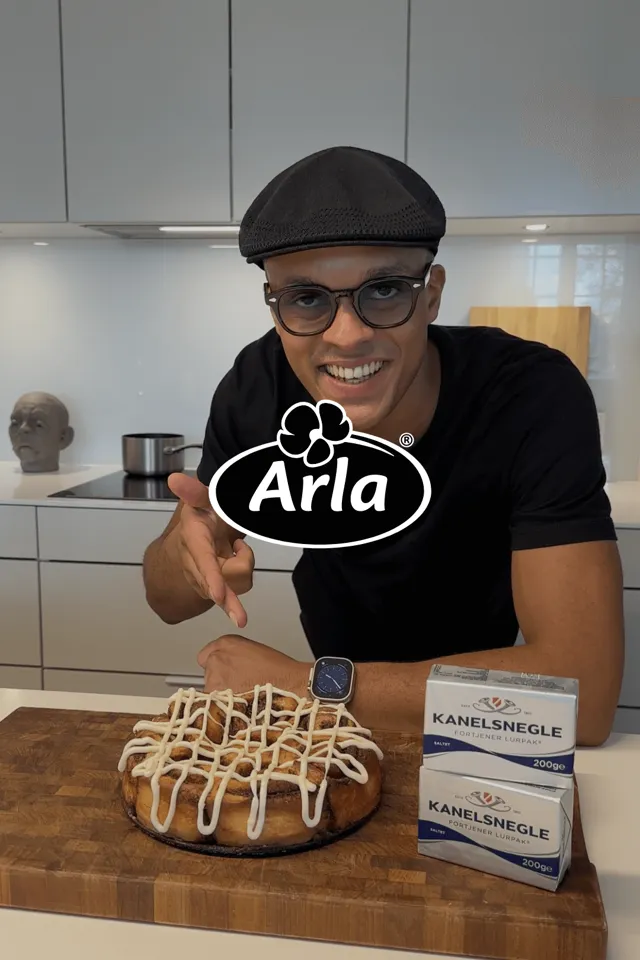
Because UGC will be used in your own channels, the agreement matters as much as the video. Unclear rights are one of the most common reasons good content ends up sitting unused. Settle these points before production starts:
- Usage period: how long may the brand use the content?
- Channels: organic, ads, web, email, TV or print?
- Advertising from the creator's profile, for example via Spark Ads on TikTok
- Number of videos, variations and any raw files
- Music and sound, which must be cleared for commercial use
- Labelling as advertising when the content is used commercially
Common mistakes with UGC content
- A script so tight that the video ends up looking like a traditional ad.
- The product takes centre stage from the first second instead of being a natural part of the story.
- Only one version of each video, so there's nothing to test.
- No clear agreement on usage rights, so the content can't be used in ads.
- Choosing creators by follower count, even though it's the content you're paying for.
How we work with UGC
We handle the whole process, from casting and brief to coordination, project management and delivery. On some jobs we produce the content ourselves; on others creators film it at home.
Afterwards we always advise on how best to use the content. We've made UGC for Fri Bikeshop, Pluskort.dk, Hinge, French Pharmacy and Oreo, among others.
What makes us different is that we don't only work with UGC. We work with creators every day.
So we don't have to find people from scratch for every job, and we know which profiles can deliver for your particular audience. With a large network of creators, we can cast widely and quickly.
We also understand both the creative side and performance. We know what stops the scroll, and how the same content holds up once ad spend is put behind it.
We build that knowledge into the brief, so the videos are made to be tested and scaled, not just to look good on a storyboard.
UGC rarely stands alone. It delivers the most when it works together with creator marketing and a joined-up distribution plan, which we describe under campaign management.
Frequently asked questions
UGC stands for user-generated content. Originally it meant content ordinary users made about a brand of their own accord. In marketing today it mostly refers to content brands commission from creators, made in the same natural style as users' own content. The brand owns it and can use it in ads, on its website and in its own channels.
The price depends on the number of videos and variations, how experienced the creator is, how much the production involves, and how long and how widely you may use the content. Usage rights for ads over a longer period typically cost more than organic use. Because UGC doesn't pay for access to a creator's followers, you can often produce more variations for the same budget, which makes it good for testing.
With UGC you pay for content your brand owns and distributes itself, typically in ads and on your own channels. With influencer marketing you pay for the creator to post on their own profile and reach their own audience. UGC is about performance and scale; influencer marketing is about reach and credibility. The two often work best together, and we've set out the differences in a separate guide.
When UGC runs in the brand's own ads, the platform typically shows that it's an ad. If the content is posted from the creator's own profile, or the creator's profile is used for advertising, it must be clearly labelled as advertising under the Danish Marketing Practices Act. Always agree the labelling in advance, so both brand and creator are covered and the audience is never in doubt about what they're watching.
It depends on how much you want to test. If the goal is advertising, it makes sense to have several creators and several hooks from the start, so you can compare and find the versions that perform. If the content is mainly for a product page or an email, fewer videos may be enough. Better to start with variations of one sharp idea than with lots of different ideas.
Start by making examples of the kind of content brands are asking for, such as reviews, tutorials and problem-solution videos, and put them together in a portfolio. Practise strong hooks, good sound and natural delivery. You don't need lots of followers, because it's the content brands pay for. If you want to work with brands through us, you can apply to join our network.